
Home · Rajputi Poshak · Bridal Poshak
Made to order in JaipurBridal RajputiPoshak
The four-piece wedding dress of Rajasthan — kurti, kanchli, ghaghra and odhna — cut and worked by hand for the dulhan, and matched to her choora and kundan before it ever leaves the workshop.
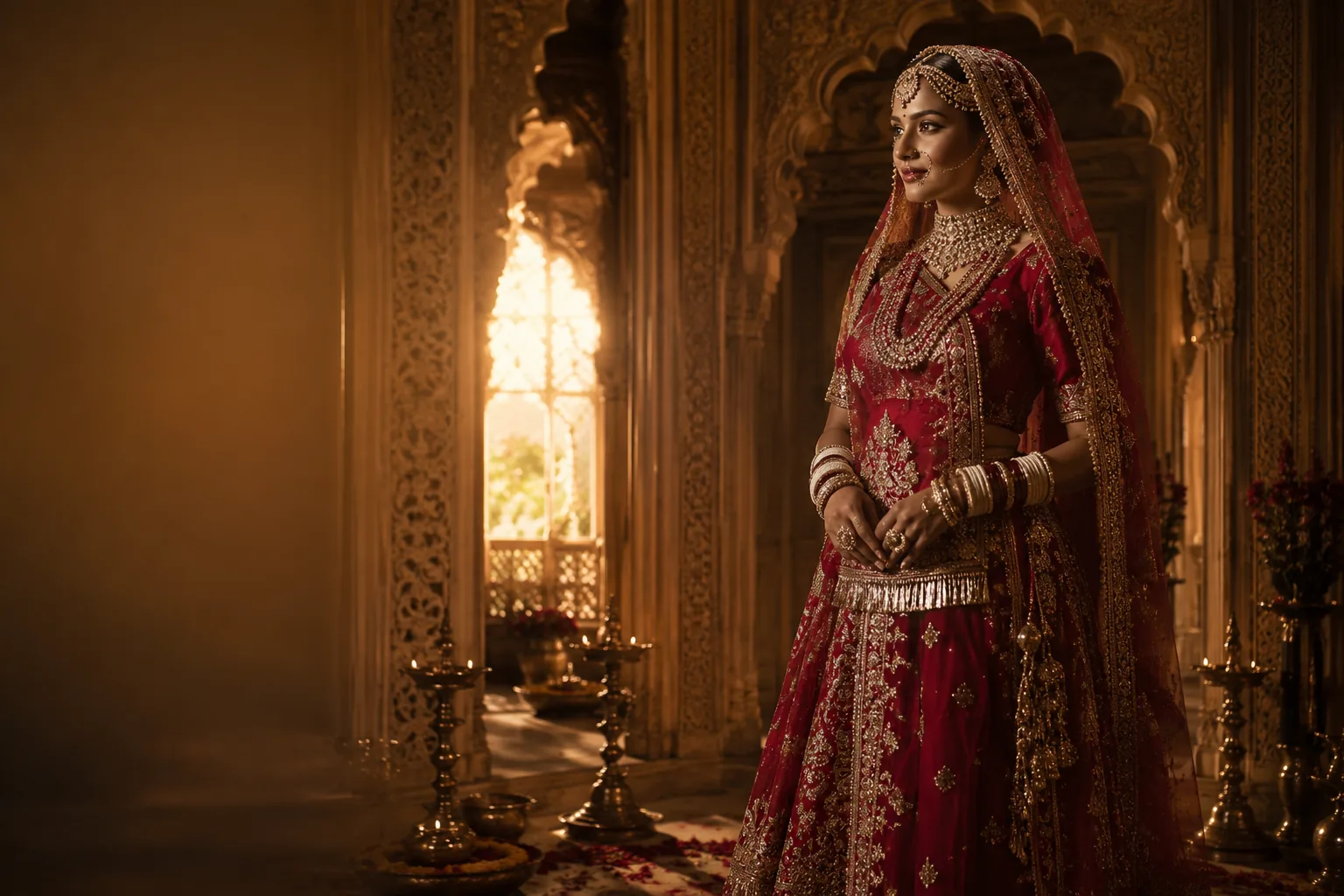 Bridal poshak · Jaipur
What is a Bridal Rajputi Poshak?
A bridal Rajputi poshak is the wedding dress of a Rajput bride: a four-piece set of kurti, kanchli, ghaghra and odhna, made in the heaviest gota patti or zardozi work the family chooses. It is traditionally red, maroon or rani pink for the pheras, the ghaghra is cut with a high kali count for fullness, and the odhna carries the main border work because it frames the face in every photograph.
Bridal Poshak
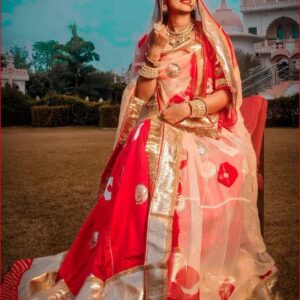
Wedding-day pieces from our Jaipur workshop. Each one can be remade in your colour, fabric, kali count and measurements.
-
Bridal Poshak
Original price was: ₹30,000.₹25,000Current price is: ₹25,000. -
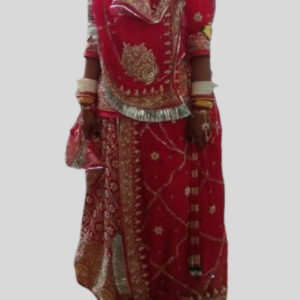
NEW BRIDAL POSHAK
Original price was: ₹40,000.₹35,000Current price is: ₹35,000.
How Many Kali Should a Bridal Ghaghra Have?
Kali are the tapered panels a ghaghra is cut from, and gher is the sweep they create at the hem. More kali means more gher, more fabric, more work — and more weight to carry through the night.
| Kali | Ghera | Feel & occasion |
|---|---|---|
| 40 kali | 6–8 metres | Moderate sweep, easy to walk and sit in — haldi, mehndi, long day functions |
| 60 kali | 10–12 metres | Full flare with a clean twirl, still manageable — sangeet, reception, most brides |
| 80 kali | 13–16 metres | Maximum gher and drama, heaviest to carry — the pheras and the main photographs |
Lighter everyday poshak go down to 12–16 kali, which is why a cotton poshak feels nothing like a bridal one even in the same colour. And the honest advice we give brides: the kali count matters less than the fabric it is cut in. Eighty kali in a stiff synthetic will stand out rather than fall — sixty kali in pure georgette will move better in every photo. Tell us the look you want and we will tell you what the fabric can actually hold.

What Does a Bridal Poshak Cost?
Three tiers, and the difference between them is the fabric, the hours of handwork and who designs the piece. Here is where each one sits.
Ready Bridal Poshak
₹25,000 – ₹35,000In stock nowPieces already stitched in the workshop, shown in the collection above. Gota patti or zardozi work on satin and georgette, with a matched odhna.
Can be altered to your measurements. Ships in 2–3 days.
Custom Bridal Poshak
₹60,000 – ₹1,00,000Made to orderCut from scratch in your colour, fabric and kali count. Pure georgette or chiffon base, denser handwork across all four pieces, and the odhna border worked to the design you choose. Real silver gota sits in this range.
3–4 weeks. Photos of the work and the drape come to you before dispatch.
Signature Designer Poshak
₹1,00,000 – ₹2,00,000CoutureOur highest tier — an original design worked out with you, in the heaviest zardozi, dabka and real silver gota, on pure silk, Banarasi or velvet. Eighty kali ghaghras, hand-dyed odhnas and matched Pachi Kundan sit here.
Allow 6–8 weeks. This is the tier families order for the pheras and keep as an heirloom.
Every quote is honest about what the budget can carry. Tell us your number and the look you want, and we will tell you which tier it falls in before you commit — ask on WhatsApp.
Choosing Your Bridal Poshak
What are the four pieces of a Rajputi poshak?
Every Rajputi poshak — bridal or otherwise — has four parts: the kurti (the upper top), the kanchli (the fitted inner blouse worn under it), the ghaghra (the flared skirt) and the odhna (the veil, draped over the head). In a bridal poshak all four carry the heavy work, and the odhna is the showpiece — it frames the face in every wedding photo, so the border work sits there.
Gota patti or zardozi — which work for a dulhan poshak?
| Work | What it is | Look & weight |
|---|---|---|
| Gota patti | Ribbon appliqué of gold-toned gota, stitched into floral and leaf patterns — a Rajasthani signature | Bright, traditional shine; lighter to wear for long ceremonies |
| Zardozi | Raised metal-thread embroidery, often with stones, dabka and sequins | Rich, dense, regal; heavier — best for the main wedding pheras |
| Mixed work | Zardozi borders and motifs over a gota patti base | The most common bridal choice — depth where it shows, weight where it matters |
Rajasthani brides traditionally wear red, maroon or rani pink for the pheras. If your functions run long, keep the heaviest work for the wedding-day poshak and pick a lighter piece — lahariya or gota patti on georgette — for the haldi and mehndi.
Poshak or lehenga — what is the difference?
A lehenga is a two-piece — skirt and blouse — with a separate dupatta. The Rajputi poshak is the older four-piece form, with the kanchli-kurti pairing and the odhna draped in the Rajasthani style. For a Rajput wedding the poshak is the traditional choice, and it is also what the aad, rakhdi and borla were designed to be worn with, so a full Pachi Kundan set sits correctly on it.
Which fabric should a bridal poshak be in?
| Fabric | Drape & feel | Best for |
|---|---|---|
| Pure georgette / chiffon | Soft, flowing drape; the odhna sits and falls the way it should — this is what “pure poshak” means in Rajasthan | The wedding-day poshak; the premium choice |
| Bember satin | Smooth, glossy surface that carries heavy zardozi well; a slightly stiffer fall | Reception and evening functions, photo-heavy events |
| Velvet | Dense and rich, holds dabka and stone work beautifully; warm to wear | Winter weddings |
| Banarasi silk | Woven zari in the fabric itself, so it carries grandeur even with lighter surface work | Brides who want heirloom fabric over heavy embroidery |
The honest rule: the fabric decides how the poshak photographs and feels at hour six of the wedding; the work decides how it looks at first glance. A pure-fabric poshak with moderate work will always outlast heavy work on cheap synthetic — the drape gives it away in every photo.
Which measurements do you need from me?
Five, and they take two minutes with a measuring tape. Bust and waist for the kanchli and kurti, hip for the ghagra fall, ghagra length from your waist to the floor in the footwear you will actually wear, and your kurti length if you want it longer or shorter than standard. Send them on WhatsApp and we cut to those figures — there is no “between sizes” problem on a made-to-order poshak. If you are unsure how to take any of them, send us a photo of the tape in place and we will correct it.
How long should the odhna be?
Between 2.5 and 3 metres for most brides. The odhna is worn over the head, not thrown over the shoulder like a Punjabi dupatta — one end tucks into the ghagra waistband, the fabric crosses the front, and the rest comes up over the head and falls over the left shoulder. That drape needs real length. Taller brides, or anyone who wants the odhna to fall lower down the back, should go to 3 metres. Both ends carry border work, because both stay visible once it is draped.
What makes a bridal poshak premium quality?
Four things you can actually check. First, the base fabric — pure or half-pure georgette and chiffon, not all-synthetic mixes that trap heat and fall stiff. Second, the gota — real gota ribbon folds soft and keeps its shine; cheap plastic gota cracks at the folds within a season. We also work in real silver gota for brides who want an heirloom piece, and where a poshak is silver-toned rather than real silver, the listing says so. Third, the work density on the odhna border and the ghaghra hem — that is where premium poshaks invest, because that is what shows. Fourth, the finishing: turn the poshak inside out. Bound seams, a proper kanchli lining and secured thread ends are the difference between boutique stitching and bazaar stitching.
How Your Poshak Is Made
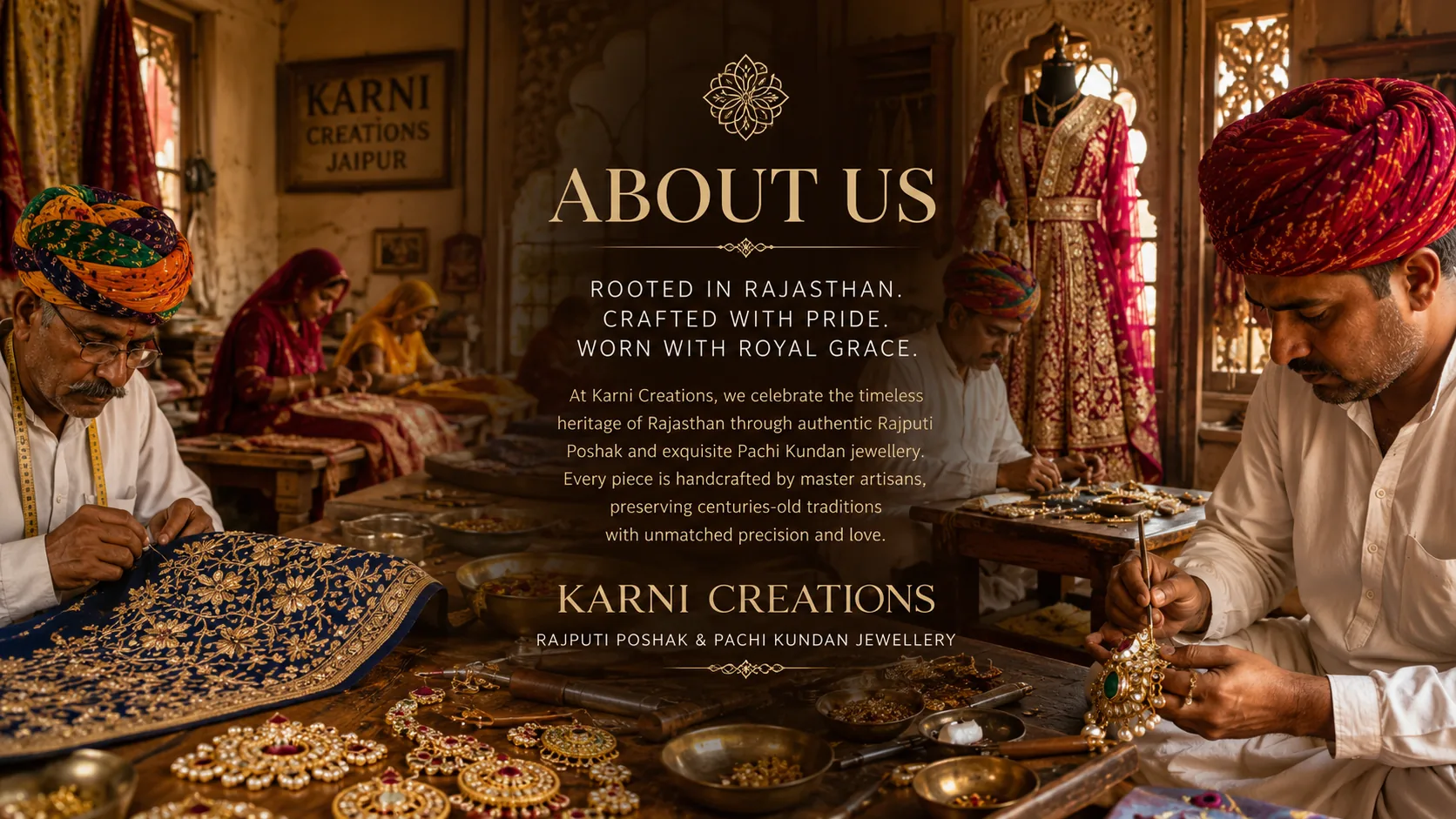
Four weeks, one workshop, and nothing shipped until you have seen it.
The conversation
Tell us the wedding date, the colour and your budget on WhatsApp. We tell you honestly what fabric and work are possible in it.
Measurements
We send a simple measurement guide. The kurti, kanchli and ghaghra are cut to your figures, and the kali count to the gher you want.
The handwork
Gota is stitched panel by panel, the odhna border last. Real silver where you have chosen it, and named as real silver.
Your approval
Close-up photos of the work, the drape and the inside finishing come to you before dispatch. It ships once you say yes.
One Wedding, Several Poshak
A Rajput wedding is not one day. Most brides need three or four poshak, and the mistake is putting the whole budget into one. Here is how families usually split it.
| Function | What works | Where it sits |
|---|---|---|
| Haldi | Yellow or peela poshak in cotton or light georgette, 40 kali, minimal gota — it will get haldi on it | Everyday range |
| Mehndi | Lahariya or bandhej in bright tones. You sit for hours with your hands occupied, so weight matters more than work | Everyday to festive |
| Mayra & tilak | Satan or georgette with moderate gota patti, 40–60 kali. The family is watching, the cameras are fewer | Ready or custom |
| The pheras | Red, maroon or rani pink. Heaviest zardozi and gota, 60–80 kali, matched odhna with full border work | Custom or signature |
| Reception | Bember satin or velvet, which photograph well under indoor lighting. Often a contrast colour to the pheras poshak | Custom range |
| Humrai & family | Coordinated lighter poshak for sisters, bhabhis and the bride’s companions — usually one colour family, not identical | Everyday range |
Our honest suggestion: put the money into the pheras poshak and the odhna, and keep the rest light. Guests remember the wedding-day poshak; you will remember which one you could actually breathe in at hour six. Send us your full function list on WhatsApp and we will plan the set together — plan the whole week with us.
More Rajputi Poshak
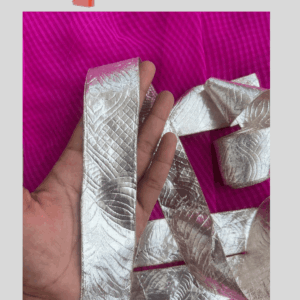
Lighter pieces for the haldi, the mehndi and the humrai — and real silver gota material for a pure poshak.
-
BAISA POSHAK
Original price was: ₹3,000.₹2,000Current price is: ₹2,000. -
Rajputi Lahriya Suit-1
Original price was: ₹1,500.₹1,260Current price is: ₹1,260. -
Rajputi Lahriya Suit-2
Original price was: ₹1,500.₹1,260Current price is: ₹1,260. -
Rajputi Lahriya Suit-3
Original price was: ₹1,500.₹1,260Current price is: ₹1,260. -
Rajputi Poshak
Original price was: ₹30,000.₹20,000Current price is: ₹20,000.
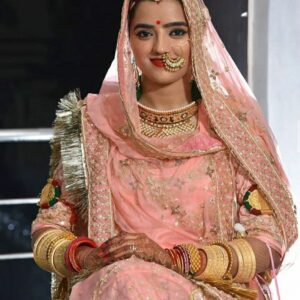
The Rest of the Dulhan Look
Poshak, choora and kundan — matched in one Jaipur workshop against the actual fabric, not a photo.
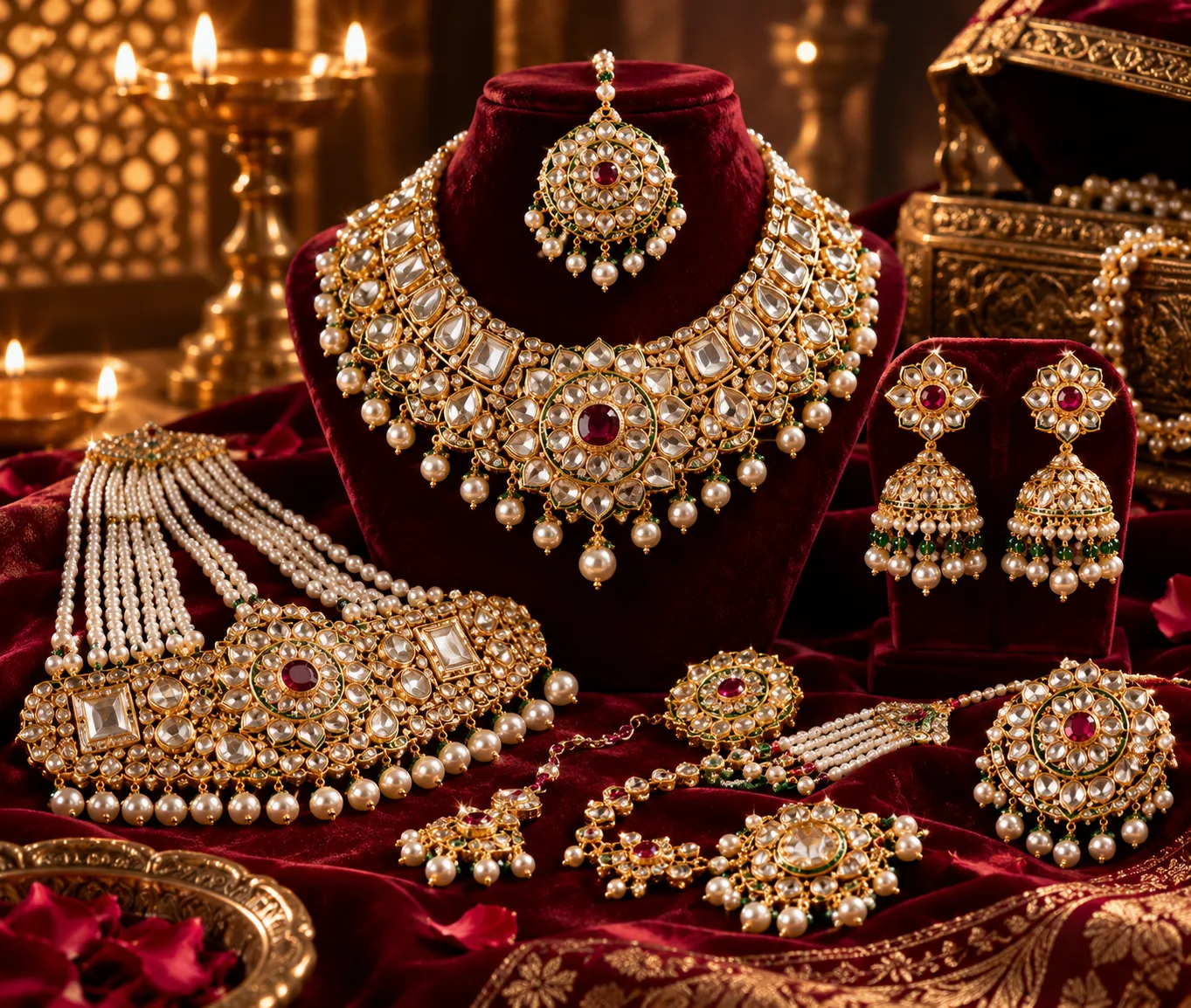
Pachi Kundan Jewellery
Aad, rakhdi, borla and timaniya — the pieces the poshak was designed to be worn with.
Explore jewellery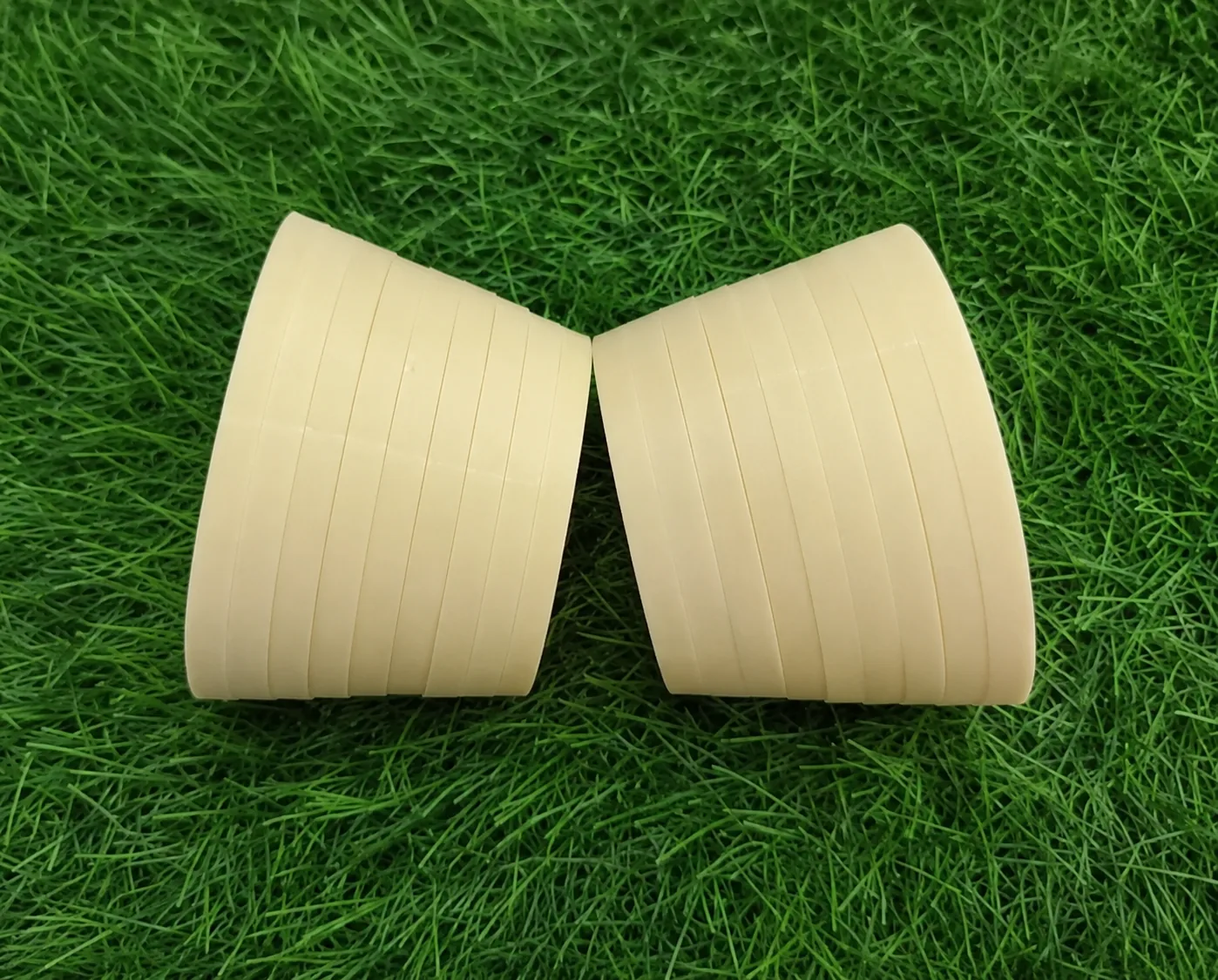
Bridal Choora & Boor Chuda
The bangle set worn from the wedding onwards, made in your family’s regional version.
Explore choora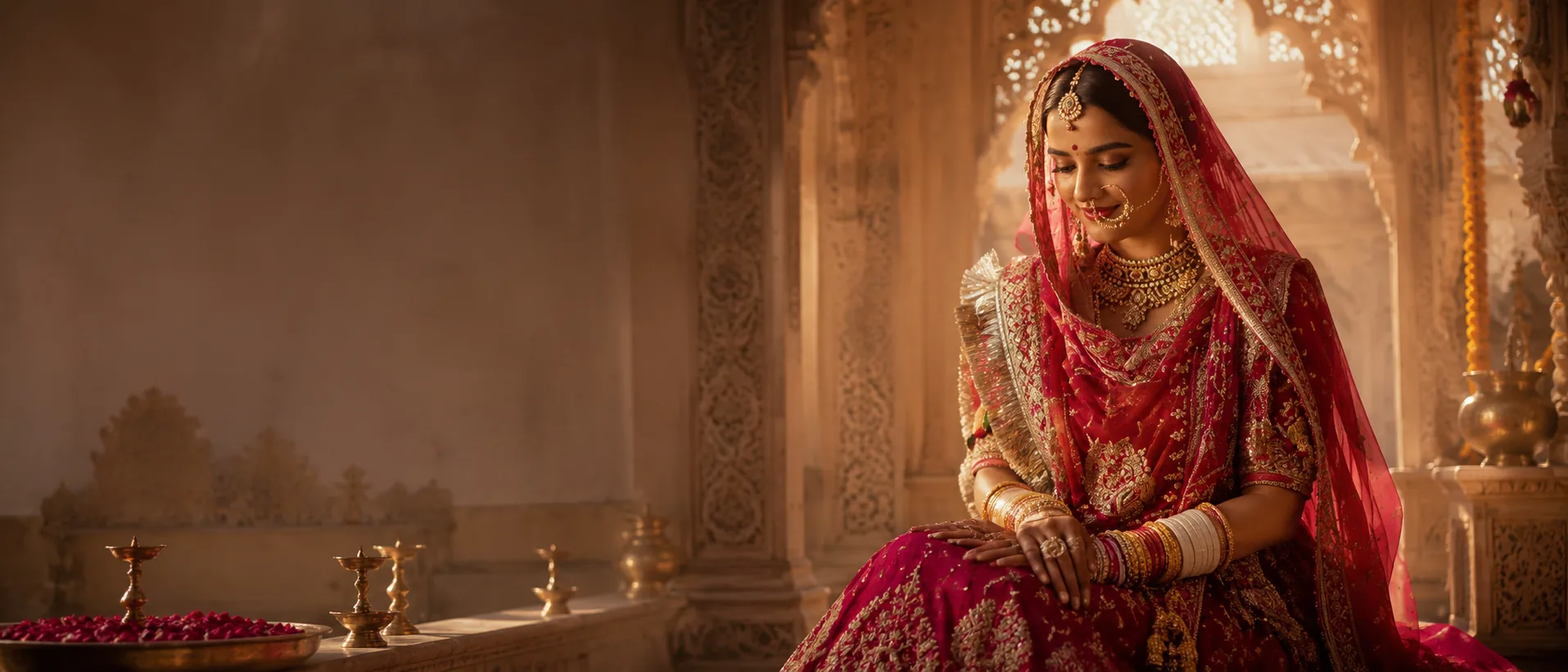
All Rajputi Poshak
Types, price guide and the full range — lahariya, baisa, gota patti and real silver.
View the guideBridal Poshak FAQs
What is included in a bridal Rajputi poshak?
All four traditional pieces: kurti, kanchli, ghaghra and odhna, in matching fabric and work. Each bridal poshak is stitched to your measurements, and the odhna carries the main border work since it frames the face in photos.
What does a bridal poshak cost?
It depends on the tier. Ready bridal pieces from our collection run ₹25,000 to ₹35,000. A custom bridal poshak, cut from scratch in your fabric, colour and kali count, sits between ₹60,000 and ₹1,00,000. Our signature designer poshak — original design, heaviest zardozi and real silver gota on pure silk or velvet — runs ₹1,00,000 to ₹2,00,000. Share your budget on WhatsApp at +91 97723 34233 and we will tell you honestly what work is possible in it.
How many kali should a bridal ghaghra have?
Most bridal ghaghras are cut in 40, 60 or 80 kali. Forty kali gives a moderate sweep that is easy to move in, sixty gives full flare with a clean twirl, and eighty gives maximum gher but is the heaviest to carry. The fabric matters more than the number — sixty kali in pure georgette falls better than eighty in a stiff synthetic.
How early should I order my wedding poshak?
Ready pieces ship in 2–3 days. A custom bridal poshak takes 3–4 weeks — that covers cutting, handwork and one round of photo approval before dispatch. A signature designer poshak needs 6–8 weeks, because the design is worked out from scratch and the handwork is far denser. For NRI orders, add international shipping time on top.
Can the poshak be matched with my choora and jewellery?
Yes — poshak, choora and Pachi Kundan jewellery are all made in the same Jaipur workshop, so the reds, meena tones and stone colours are matched against the actual fabric, not a photo. Order them together and we coordinate the set before dispatch.
Which boor chuda goes with a bridal poshak?
That depends on your region, not on the poshak. Marwar, Mewar, Shekhawati and Hadoti each keep their own boor chuda, and most families want the version their own house has always worn. We make all four — see Marwar, Mewar, Shekhawati and Hadoti.
How do I know the fabric is genuinely premium?
Ask for fabric close-ups and a drape video before dispatch — pure georgette and chiffon fall in soft folds, synthetic mixes stand stiff. Check the gota at a fold: real gota bends without cracking. We send both, plus photos of the inside finishing, with every bridal order before it ships.
How heavy is a bridal poshak to wear?
A full bridal poshak with 80 kali and dense zardozi is genuinely heavy — the ghagra alone can run 13 to 16 metres of fabric before the handwork goes on. Most brides carry it comfortably for the pheras and the photographs, but not for a fourteen-hour day. That is why we suggest keeping the heaviest piece for the wedding itself and lighter poshak for the haldi, mehndi and reception. If weight is a real concern, tell us — we can hold the gher at 60 kali and move the work density to the odhna border instead, where it shows most.
What is a pyor poshak and a half pyor poshak?
“Pyor” is used two ways in Rajasthan, which is why it confuses people. On fabric volume, a pyor ghagra uses the full 12 to 16 metres for maximum flare, while a half pyor uses 6 to 8 metres — the same silhouette in a lighter, more wearable form. On materials, a pure poshak means real silver gota rather than imitation. When we use either word we say which meaning we mean, and the listing spells it out.
How is the odhna draped on a Rajputi poshak?
Not the way a dupatta is. One end tucks into the ghagra waistband at the hip, the fabric crosses the front of the body, and the remaining length comes up over the head and falls over the left shoulder and down the back. The head drape is part of the poshak’s identity, not an optional styling choice — it is kept up at temples, ceremonies and before elders, and may slip to the shoulder in relaxed settings. That is also why the odhna runs 2.5 to 3 metres and carries border work on both ends.
What is the difference between a pure poshak and a regular one?
A pure — or “pyor” — poshak uses real silver gota and zari instead of imitation, and pure georgette or chiffon as the base. It is heavier, holds its shine far longer, and is usually kept as a family heirloom. A regular poshak uses silver-toned imitation gota at a much lower price. Our listings always name which one you are getting.
Can I see the poshak in person before ordering?
Most of our brides order from outside Jaipur, so the whole process runs on WhatsApp — we send fabric close-ups, drape videos and photos of the handwork at every stage, and nothing ships until you approve it. If you are in Jaipur and would rather see fabric in hand, message us on +91 97723 34233 and we will arrange a time at the workshop.
Do you deliver bridal poshak outside Rajasthan?
Yes, across India with free shipping — and to the USA, UK, Canada, UAE, Australia and New Zealand for NRI weddings. See our USA, Australia and New Zealand pages. Every poshak is photographed before dispatch and packed flat so the work is not crushed in transit.
Plan Your Bridal Poshak
Tell us the wedding date, the colour you have in mind and your budget. We will show you what is possible in it, stitch it in Jaipur, and send photos before it ships.
Or call +91 97723 34233